
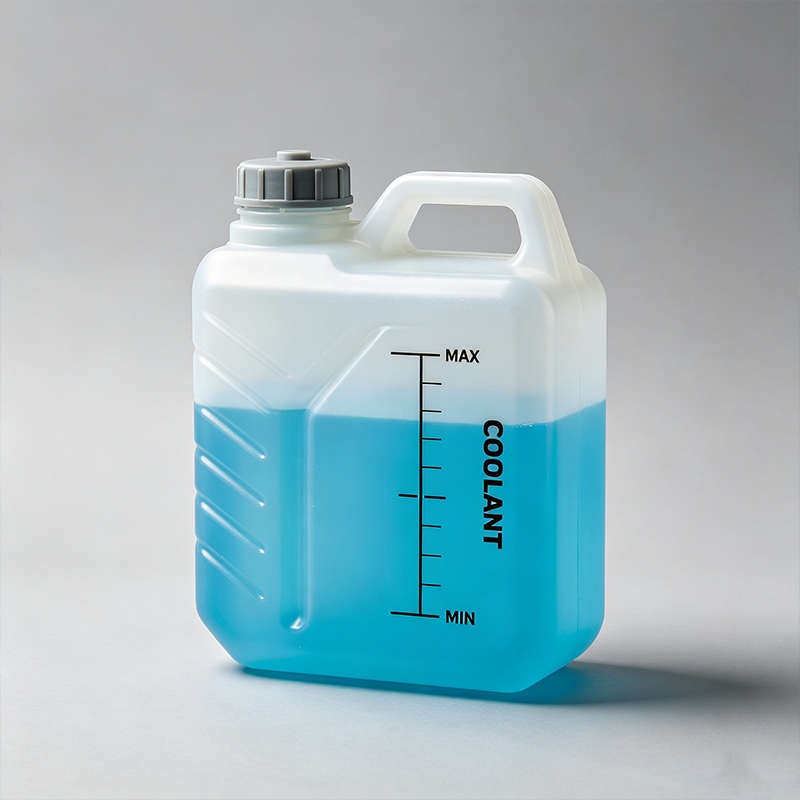
A coolant reservoir is a small part, but it plays a big role in every vehicle's cooling system. It stores extra coolant, keeps the cooling system balanced, and helps prevent engine overheating. If the reservoir leaks, cracks, or fails under pressure, the entire cooling system can suffer.
Because of this, quality control is one of the most important steps in coolant reservoir OEM production. Every stage, from material selection to final inspection, affects the safety and reliability of the finished product.
This guide explains how professional manufacturers control quality during production, what buyers should look for when selecting an OEM supplier, and how Carstarhelps customers receive dependable coolant reservoir solutions.
Why Quality Control Matters in Coolant Reservoir Manufacturing
Vehicle owners expect cooling systems to work in all weather conditions. Therefore, coolant reservoirs must perform well in both high temperatures and freezing environments.
Poor manufacturing can lead to several problems, including:
- Coolant leakage
- Cracks caused by heat or vibration
- Poor pressure resistance
- Incorrect installation dimensions
- Reduced service life
As a result, importers, distributors, and automotive brands should work only with manufacturers that follow strict quality management processes.
Reliable quality control also helps reduce warranty claims, improve customer satisfaction, and protect brand reputation.
Selecting High-Quality Raw Materials
Quality begins before production starts.
Most automotive coolant reservoirs are made from high-grade polypropylene (PP) or high-density polyethylene (HDPE). These materials provide excellent strength while remaining lightweight.
Professional OEM manufacturers carefully inspect every batch of raw materials before production. They check:
- Material purity
- Melt flow index
- Heat resistance
- Chemical resistance
- Impact strength
Only qualified materials enter the production line. This simple step greatly reduces production defects later.
Precision Mold Design Improves Product Consistency
Even excellent materials cannot produce quality parts without accurate molds.
Professional mold design ensures:
- Uniform wall thickness
- Smooth internal surfaces
- Stable dimensions
- Proper mounting locations
- Consistent coolant capacity
Modern CNC machining allows manufacturers to produce highly accurate molds that deliver repeatable results throughout mass production.
Regular mold maintenance is equally important because worn molds can create flashing, deformation, or dimensional errors.
Injection Blow Molding and Process Control
During production, process control is closely monitored.
Engineers carefully manage:
- Injection pressure
- Melt temperature
- Cooling time
- Blow pressure
- Cycle time
Even small changes can affect product quality.
Advanced production equipment automatically records production parameters. This helps maintain consistent quality from the first part to the last.
In addition, experienced technicians regularly inspect production conditions to prevent defects before they occur.
Dimensional Inspection Ensures Perfect Vehicle Fit
Every coolant reservoir must match the original vehicle specifications.
Manufacturers measure critical dimensions such as:
- Overall size
- Mounting points
- Hose connections
- Cap threads
- Sensor openings
Coordinate Measuring Machines (CMM) and precision gauges help verify every important dimension.
Accurate measurements ensure that installation is quick and that replacement parts fit without modification.
Leak Testing Is Essential
Leak testing is one of the most important quality inspections.
Even a tiny leak may cause coolant loss and engine overheating.
Professional manufacturers perform pressure testing using specialized equipment.
Each reservoir is tested under controlled pressure to detect:
- Pinholes
- Weak welds
- Material defects
- Seal failures
Only products that pass these tests continue to packaging.
Pressure Resistance Testing
Coolant reservoirs experience constant pressure changes during engine operation.
Therefore, manufacturers simulate real working conditions through pressure resistance testing.
These tests evaluate:
- Burst pressure
- Pressure cycling
- Long-term durability
- Structural stability
Products that cannot withstand design pressure are removed from production immediately.
High-Temperature and Low-Temperature Testing
Vehicles operate in many different climates.
Therefore, coolant reservoirs must perform reliably in both extreme heat and freezing temperatures.
Environmental testing includes:
- High-temperature aging
- Low-temperature impact testing
- Thermal cycling
- Heat deformation testing
These evaluations help verify long-term performance under real driving conditions.
Chemical Resistance Verification
Engine coolants contain additives that can affect plastics over time.
Manufacturers expose coolant reservoirs to different coolant formulations to evaluate:
- Chemical compatibility
- Surface stability
- Material swelling
- Crack resistance
This testing ensures long service life even after years of continuous coolant exposure.
Vibration and Durability Testing
Vehicles experience constant vibration during daily driving.
To simulate these conditions, manufacturers conduct vibration tests that evaluate:
- Mounting strength
- Joint durability
- Crack resistance
- Structural integrity
Durability testing helps identify weaknesses before products reach customers.
Appearance Inspection
Visual quality also reflects manufacturing standards.
Inspectors examine every product for:
- Surface scratches
- Flash marks
- Sink marks
- Color consistency
- Surface contamination
Customers expect replacement parts to look as professional as original equipment.
A clean appearance also builds confidence in product quality.
Complete Traceability Throughout Production
Professional OEM manufacturers maintain complete production records.
Each production batch can be traced through:
- Raw material records
- Mold identification
- Machine settings
- Inspection reports
- Testing results
If any issue occurs, manufacturers can quickly identify its source and implement corrective actions.
Traceability also supports long-term quality improvement.
Packaging Protection Before Delivery
Quality control continues after manufacturing.
Proper packaging prevents damage during transportation.
Manufacturers typically use:
- Individual protective bags
- Protective separators
- Strong export cartons
- Moisture protection
- Secure pallet packaging
Well-designed packaging reduces shipping damage and keeps products in excellent condition until they reach customers.
How Carstar Supports Reliable Coolant Reservoir OEM Projects
For automotive brands, wholesalers, and distributors, selecting the right manufacturing partner is just as important as choosing the right product.
Carstar provides comprehensive OEM manufacturing solutions for automotive cooling system components. From product development and mold design to mass production and final inspection, every stage follows a structured quality management process.
The engineering team works closely with customers to develop coolant reservoirs that match original equipment specifications while meeting individual market requirements. Multiple inspections are carried out during production, including dimensional verification, leak testing, pressure testing, and appearance checks, helping ensure stable product quality across every production batch.
Carstar also supports custom branding, private labeling, packaging design, and flexible OEM production for customers serving different vehicle markets. This integrated manufacturing approach helps buyers reduce sourcing risks while maintaining consistent product performance and reliable supply.
Learn more about Carstar's OEM automotive parts solutions at https://carstarauto.net/.
Choosing the Right Coolant Reservoir OEM Supplier
Not every supplier follows the same quality standards.
Before placing an order, buyers should evaluate several important factors:
- Manufacturing experience
- Quality management system
- Production equipment
- Testing capabilities
- Engineering support
- OEM customization services
- Export experience
- Stable production capacity
Requesting inspection reports and sample testing can also help verify product quality before mass production begins.
Conclusion
Quality control is the foundation of successful coolant reservoir OEM production. Every stage, from raw material selection to final packaging, affects product reliability and customer satisfaction.
Manufacturers that invest in advanced equipment, strict inspection procedures, and complete traceability consistently deliver products that meet demanding automotive standards.
For automotive brands, distributors, and importers, partnering with an experienced OEM manufacturer helps reduce quality risks, improve customer confidence, and support long-term business growth. By choosing a supplier with comprehensive testing capabilities and a proven quality management system, buyers can ensure that every coolant reservoir performs reliably throughout its service life.


