
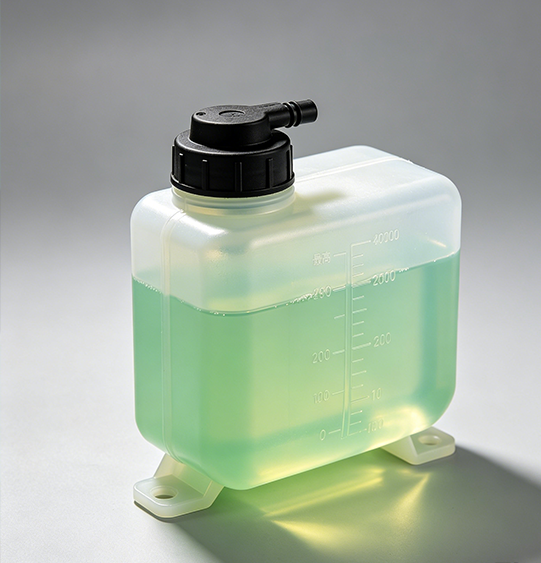
A coolant reservoir is a key part of every vehicle's cooling system. It stores extra coolant, helps control pressure changes, and supports stable engine temperatures. As vehicle performance standards continue to rise, automotive brands need coolant reservoirs that offer long service life, precise fitment, and reliable performance under different driving conditions.
For OEM buyers, understanding the coolant reservoir manufacturing process can help improve product quality, reduce warranty risks, and strengthen supply chain reliability. This guide explains the major steps involved in OEM coolant reservoir production and highlights important factors when selecting a manufacturing partner.
What Is an OEM Coolant Reservoir?
An OEM coolant reservoir, also called a coolant expansion tank, is a plastic container connected to the engine cooling system. It allows coolant to expand and contract as engine temperatures change.
Unlike aftermarket products, OEM coolant reservoirs are manufactured according to the exact specifications of vehicle manufacturers. This ensures proper installation, consistent performance, and long-term durability.
Modern coolant reservoirs must withstand:
- High operating temperatures
- Continuous pressure cycles
- Chemical exposure from coolant fluids
- Engine vibration
- Long service intervals
Because of these demands, material quality and manufacturing precision are critical.
Selecting the Right Materials for Coolant Reservoir Production
Material selection is one of the most important steps in coolant reservoir manufacturing.
Most OEM coolant reservoirs are produced using high-grade thermoplastics because they provide excellent heat resistance and durability.
Common materials include:
Polypropylene (PP)
Polypropylene is widely used because it offers:
- Good chemical resistance
- Lightweight construction
- Cost-effective production
- Reliable performance under normal operating conditions
Polyamide (PA)
Polyamide materials provide:
- Higher temperature resistance
- Improved mechanical strength
- Enhanced durability for demanding applications
Reinforced Engineering Plastics
For high-performance vehicles and heavy-duty applications, manufacturers may use reinforced plastics that offer:
- Greater structural stability
- Better resistance to pressure changes
- Longer service life
Material selection depends on vehicle requirements, engine design, and environmental conditions.
OEM Coolant Reservoir Design and Engineering
Before production begins, engineers create detailed designs based on customer specifications.
The design stage includes:
- Reservoir capacity calculations
- Coolant flow optimization
- Mounting bracket integration
- Sensor port design
- Pressure cap compatibility
- Vehicle packaging requirements
Modern manufacturers use advanced CAD software and simulation tools to evaluate performance before tooling is developed.
These simulations help identify potential weaknesses early and reduce development costs.
Mold Development and Tooling
After the design is approved, mold development begins.
The quality of the mold directly affects:
- Product dimensions
- Surface finish
- Production efficiency
- Long-term consistency
OEM coolant reservoir molds are typically manufactured using high-precision CNC machining equipment.
During tooling development, engineers focus on:
- Uniform wall thickness
- Proper cooling channels
- Optimized gate locations
- Reduced material shrinkage
- Dimensional accuracy
Although mold development requires significant investment, it plays a major role in achieving stable production quality.
Injection Molding Process
Injection molding is the primary manufacturing method for coolant reservoirs.
The process includes several steps:
Material Preparation
Plastic resin is carefully dried and prepared before molding.
This helps prevent:
- Surface defects
- Air bubbles
- Material degradation
Injection Molding
Molten plastic is injected into the mold cavity under controlled pressure.
Key parameters include:
- Injection pressure
- Mold temperature
- Cooling time
- Cycle time
Maintaining stable process parameters ensures consistent product quality across large production volumes.
Cooling and Ejection
Once the plastic solidifies, the part is removed from the mold.
The reservoir then undergoes visual inspection before entering the next production stage.
Assembly and Secondary Operations
Many coolant reservoirs require additional assembly procedures.
These may include:
- Cap installation
- Sensor integration
- Hose connector assembly
- Ultrasonic welding
- Leak-proof sealing
Each component must meet strict OEM specifications to ensure proper system performance.
Automated assembly equipment is often used to improve efficiency and consistency.
Quality Control in Coolant Reservoir Manufacturing
Quality control is essential throughout the production process.
Reliable manufacturers perform inspections at multiple stages.
Dimensional Inspection
Engineers verify critical dimensions using precision measuring equipment.
This ensures:
- Accurate fitment
- Proper installation
- Consistent assembly performance
Pressure Testing
Each reservoir must withstand operating pressures without failure.
Pressure testing helps identify:
- Cracks
- Weak welds
- Seal defects
- Material inconsistencies
Leak Testing
Leak testing confirms that the reservoir can safely contain coolant under operating conditions.
Manufacturers often use automated air-pressure testing systems to achieve accurate results.
Thermal Performance Testing
Reservoirs are exposed to repeated heating and cooling cycles.
This verifies resistance to:
- Thermal expansion
- Material fatigue
- Long-term stress
Chemical Resistance Testing
Testing evaluates compatibility with various coolant formulations.
This ensures stable performance throughout the product's service life.
Common Manufacturing Challenges
Even with advanced production technology, coolant reservoir manufacturing presents several challenges.
Material Warpage
Improper cooling can cause deformation and dimensional variation.
Manufacturers reduce this risk through optimized mold design and process control.
Weld Line Weakness
Poor material flow can create weak areas within the reservoir.
Advanced mold engineering helps improve structural integrity.
Pressure Resistance Issues
Thin walls or inconsistent material distribution can affect pressure performance.
Simulation and testing help prevent these problems before mass production.
Leak Failures
Improper welding or assembly may lead to coolant leakage.
Comprehensive testing procedures help eliminate these risks.
How Carstar Supports OEM Coolant Reservoir Projects
As a professional automotive parts manufacturer, Carstar provides customized OEM solutions for global automotive customers.
Drawing on extensive experience in automotive plastic component production, Carstar supports clients throughout the entire product development cycle.
Its services include:
- Product design support
- Prototype development
- Tooling management
- Mass production
- Quality assurance
- Global supply chain support
By working closely with customers, Carstar helps ensure that coolant reservoir products meet performance, durability, and fitment requirements.
In one customer project, the client required a customized coolant reservoir with enhanced durability for demanding operating environments. Through material optimization, tooling improvements, and strict quality validation, Carstar helped achieve reliable product performance while maintaining efficient production schedules.
This collaborative approach enables automotive brands to reduce development risks and accelerate product launches.
For more information about automotive OEM manufacturing solutions, visit Carstar at https://carstarauto.net/.
Choosing the Right OEM Coolant Reservoir Manufacturer
Selecting the right manufacturing partner is just as important as product design.
When evaluating suppliers, consider the following factors:
Engineering Capabilities
Strong engineering support helps optimize product performance and reduce development costs.
Manufacturing Capacity
A qualified supplier should be able to support both low-volume and high-volume production requirements.
Quality Management Systems
Look for manufacturers with established quality processes and automotive industry certifications.
Testing Capabilities
Comprehensive testing equipment ensures product reliability before shipment.
Supply Chain Stability
Reliable sourcing and production planning help prevent delivery delays and inventory shortages.
Future Trends in Coolant Reservoir Manufacturing
The automotive industry continues to evolve, creating new opportunities for coolant reservoir manufacturers.
Key trends include:
- Lightweight material development
- Increased use of advanced engineering plastics
- Greater automation in production
- Higher performance requirements for electric vehicles
- Enhanced quality monitoring through digital manufacturing systems
As vehicle technology advances, OEM coolant reservoirs will continue to require higher levels of precision, durability, and reliability.
Conclusion
OEM coolant reservoir manufacturing involves much more than plastic molding. Material selection, engineering design, tooling quality, process control, and rigorous testing all contribute to final product performance.
Automotive brands that partner with experienced manufacturers can achieve better quality, lower warranty risks, and stronger long-term supply chain stability. By understanding the complete manufacturing process and working with capable suppliers such as Carstar, businesses can develop coolant reservoir solutions that meet demanding industry standards and support long-term vehicle reliability.


Copyright © 2026 常州卡尔世达车辆零部件有限公司 Ltd. All Rights Reserved. POWERED BY WEIMOBTRADE
