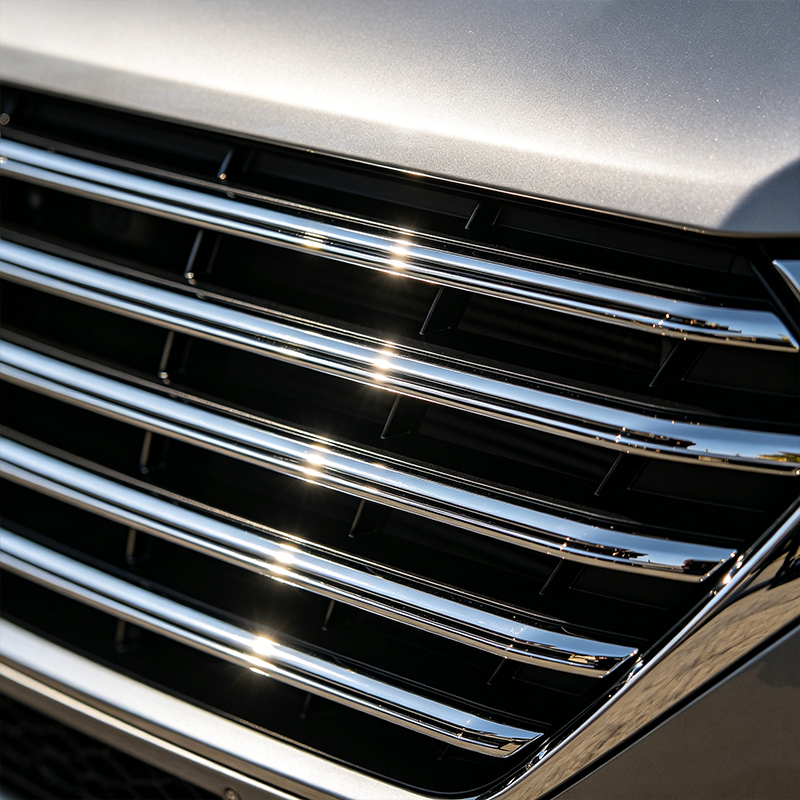
The automotive front grille is more than just a design feature. It plays a key role in airflow, cooling, and vehicle identity. At the same time, it must meet strict certification and fitment standards to ensure safety and performance.
For auto parts importers and distributors, understanding these standards is essential. It helps you choose the right supplier and avoid costly mistakes.
What Is an Automotive Front Grille and Why Standards Matter
A front grille is the opening at the front of a vehicle that allows air to reach the radiator and engine. It also protects internal components from debris while shaping the vehicle’s appearance.
However, modern grilles are more complex than before. They often integrate sensors, cameras, and airflow systems. Because of this, certification and fitment standards are now more important than ever.
If a grille does not meet these standards, it can:
- Reduce cooling efficiency
- Interfere with sensors or safety systems
- Cause installation issues or structural damage
Key Certification Requirements for Front Grilles
Automotive front grilles must pass several types of testing before they are approved for use.
Material and Durability Testing
Grilles must withstand heat, impact, and long-term exposure. Testing checks:
- Structural strength
- Corrosion resistance
- Weather performance
Professional testing institutions evaluate these factors to ensure reliability and safety.
Safety and Functional Compliance
Modern vehicles rely on advanced systems. Therefore, the grille must not block or affect:
- Radar sensors
- Cameras
- Airflow to the engine
Poorly designed grilles can disrupt these systems and lead to performance issues.
Dimensional Accuracy Standards
Certification also requires precise measurements. Even small deviations can cause problems during installation or operation.
OEM grilles are built to exact factory tolerances, which ensures seamless integration with the vehicle.
Understanding Front Grille Fitment Standards
Fitment is one of the most critical aspects of a front grille. It determines how well the part integrates with the vehicle.
Exact Vehicle Matching
A grille must match the vehicle’s:
- Model and year
- Trim level
- Mounting points
Even similar models can have different specifications. A poor match can lead to gaps, vibration, or misalignment.
Alignment with Adjacent Parts
The grille must align perfectly with:
If alignment is off, it affects both appearance and performance. In fact, the grille is one of the most visible parts of a vehicle, so even small errors are easy to notice.
Integration with Vehicle Systems
Modern grilles often include space for sensors and airflow channels. Proper fitment ensures:
- Correct airflow for cooling
- Accurate sensor performance
- Stable installation without vibration
Without proper integration, the grille may cause overheating or system errors.
Common Fitment Problems in the Market
Importers and distributors often face issues when sourcing front grilles.
Misalignment and Gaps
Low-quality products may not match OEM dimensions. This leads to visible gaps and poor installation.
Weak Mounting Structures
Poor design can result in loose or vibrating grilles, especially at high speeds.
Sensor Compatibility Issues
Some aftermarket grilles do not support advanced driver systems, which can affect safety features.
These problems highlight the importance of choosing certified and experienced OEM suppliers.
How Carstar Ensures Compliance and Perfect Fitment
Carstar ( https://carstarauto.net/) ) provides front grille solutions that focus on both certification and fitment accuracy.
Case Study: Precision Fitment for European Market
A European distributor needed front grilles that matched multiple vehicle models with strict requirements.
Carstar’s solution:
- Developed molds based on OEM data
- Ensured exact mounting point alignment
- Conducted repeated fitment testing
Result:
The client achieved faster installation and reduced return rates.
Case Study: Sensor-Compatible Grille Design
A North American client required grilles compatible with advanced safety systems.
Carstar’s solution:
- Designed sensor-friendly grille structures
- Maintained proper airflow and signal transmission
- Tested performance under real conditions
Result:
The products worked seamlessly with vehicle systems, improving customer trust.
Case Study: Durable Materials for Harsh Environments
A customer in a coastal region faced corrosion issues with previous suppliers.
Carstar’s solution:
- Upgraded materials for better corrosion resistance
- Applied protective coatings
- Performed environmental testing
Result:
The new grilles showed longer lifespan and better performance.
To ensure compliance with certification and fitment standards, you should consider:
Strong Engineering Capability
The supplier should understand OEM specifications and vehicle systems.
Reliable Testing Process
Look for manufacturers that conduct durability and performance testing.
Customization Support
A good OEM partner can adapt designs to meet different market needs.
Consistent Production Quality
Stable
How Custom Front Grille OEM Solutions Help Auto Brands Stand Out
Top Factors to Consider When Selecting a Front Grille OEM Supplier