
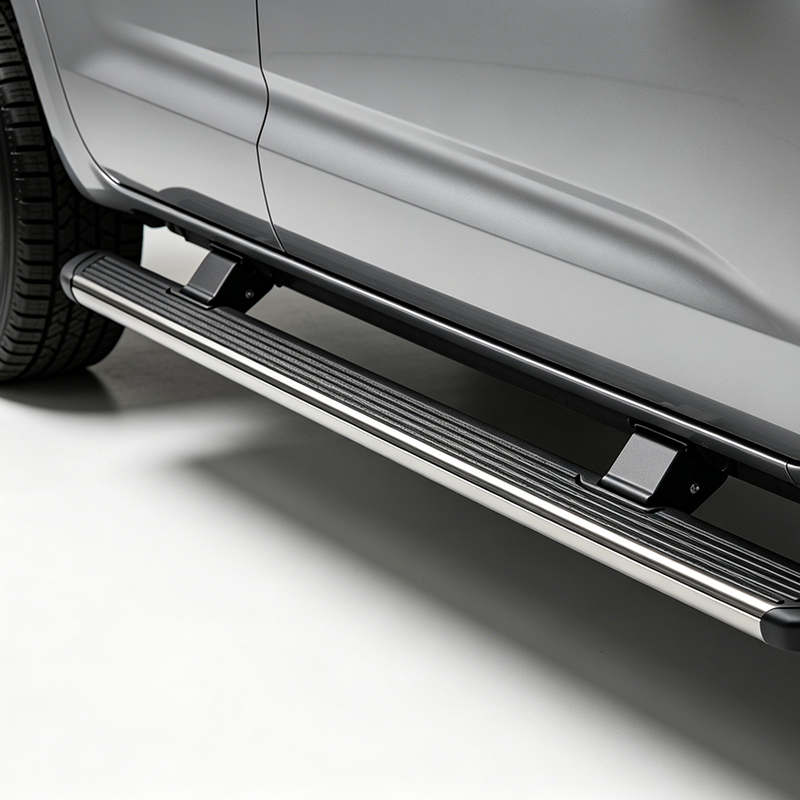
Running boards are an important upgrade for SUVs, pickup trucks, and off-road vehicles. They improve vehicle access, add protection, and enhance appearance. For importers and distributors, choosing the right material is critical.
Today, the two most common OEM options are aluminum running boards and steel running boards. Each material offers different advantages, depending on the target market and vehicle type.
Understanding these differences helps buyers make better sourcing decisions and improve customer satisfaction.
Why Running Board Material Matters
The material of a running board affects:
- Product durability
- Vehicle weight
- Corrosion resistance
- Installation performance
- Overall cost
Because different markets have different climate conditions and customer preferences, selecting the right OEM solution is essential.
Advantages of Aluminum Running Boards
Aluminum running boards are widely used in modern vehicles because they are lightweight and resistant to rust.
Lightweight Design
One major advantage is lower weight. Aluminum is much lighter than steel, which helps improve fuel efficiency and reduces vehicle load.
This is especially important for:
- Electric vehicles
- Modern SUVs
- Daily-use pickup trucks
Better Corrosion Resistance
Aluminum naturally resists rust. Therefore, it performs well in areas with:
- Rain
- Snow
- Coastal humidity
For many distributors, this means fewer customer complaints and longer product life.
Modern Appearance
Aluminum running boards usually have a cleaner and more modern look. They are often used on premium vehicle models because of their stylish finish.
Advantages of Steel Running Boards
Steel running boards remain popular because of their strength and durability.
Higher Load Capacity
Steel is stronger than aluminum. As a result, steel running boards are ideal for:
- Heavy-duty trucks
- Commercial vehicles
- Off-road applications
They can handle higher weight and rougher conditions.
Better Impact Resistance
Steel performs better in demanding environments. It is less likely to bend under heavy impact.
For off-road users, this extra strength is a major advantage.
Cost Efficiency for Some Markets
In many cases, steel running boards offer lower production costs. Therefore, they are often preferred in price-sensitive markets.
Common Challenges with Aluminum and Steel Running Boards
Both materials have strengths, but each also has challenges.
Aluminum Running Board Challenges
- Higher material cost
- Lower impact resistance compared to steel
- Surface scratches may be more visible
Steel Running Board Challenges
- Heavier weight
- Risk of rust if coating quality is poor
- Higher transportation costs due to weight
Because of this, buyers should choose products based on market demand rather than price alone.
How Carstar Supports OEM Running Board Projects
Carstar (https://carstarauto.net/) provides customized OEM running board solutions for global automotive buyers.
Case Study: Aluminum Running Boards for a European Distributor
A European client needed lightweight running boards for urban SUVs.
Carstar’s solution:
- Used corrosion-resistant aluminum materials
- Added anti-slip surface design
- Customized packaging for private label sales
Result:
The client improved product sales in regions with wet weather conditions and reduced warranty claims.
Case Study: Steel Running Boards for Off-Road Market
A distributor in North America required durable running boards for pickup trucks and off-road vehicles.
Carstar’s solution:
- Reinforced steel structure
- Added high-strength powder coating
- Conducted load and durability testing
Result:
The client successfully expanded its off-road product line with strong market feedback.
How to Choose the Right OEM Running Board Option
The best choice depends on your target customers and vehicle applications.
Choose Aluminum Running Boards If:
- Your market values lightweight products
- Vehicles are mainly used in cities
- Corrosion resistance is important
- Customers prefer modern styling
Choose Steel Running Boards If:
- Durability is the main priority
- Products are used for off-road driving
- Vehicles carry heavy loads
- Budget control is important
In some cases, distributors may offer both options to cover different customer needs.
Important Factors When Selecting an OEM Supplier
Choosing the right OEM partner is just as important as choosing the material.
You should look for suppliers with:
- Stable product quality
- Strong customization capability
- Reliable production capacity
- Strict testing standards
- On-time delivery support
Experienced manufacturers can also help buyers select the most suitable material for their market.
Future Trends in OEM Running Boards
The running board market continues to evolve. More buyers now focus on:
- Lightweight materials
- Improved corrosion protection
- Smart electric running boards
- Better surface coatings
At the same time, vehicle manufacturers continue to demand stronger and more stylish designs.
This creates new opportunities for importers and distributors looking to expand their product range.
Conclusion
Both aluminum and steel running boards offer valuable advantages. Aluminum provides lightweight performance and strong corrosion resistance, while steel delivers superior strength and durability.
For importers and distributors, the right OEM option depends on vehicle type, customer demand, and market conditions.
With experienced suppliers like Carstar (https://carstarauto.net/), buyers can access customized running board solutions that balance quality, performance, and cost.
Choosing the right running board material is not just about product design. It is also about creating long-term value for your business and customers.


