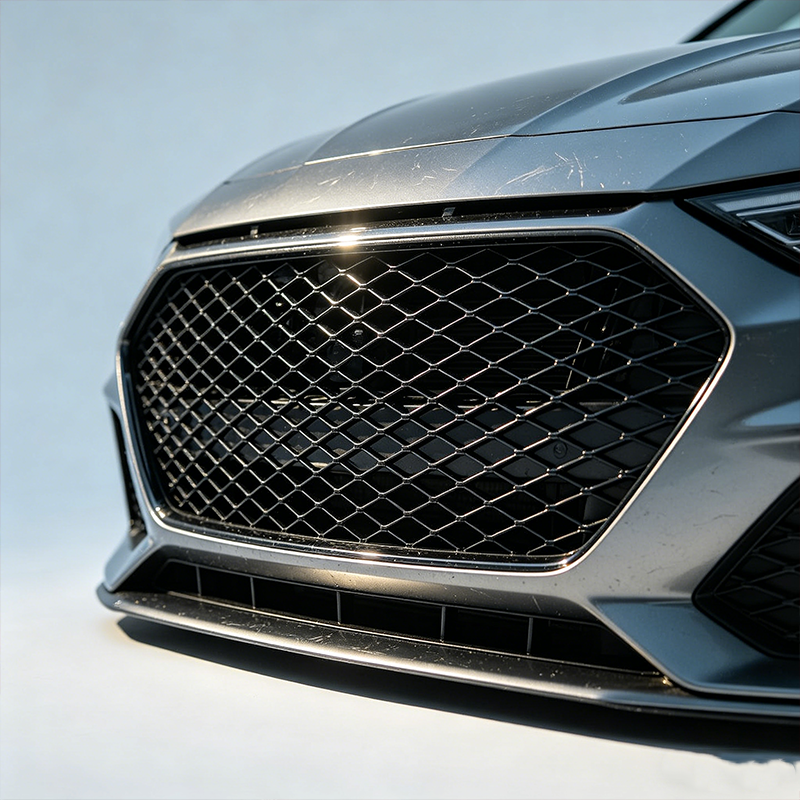
When sourcing automotive parts, choosing the right material is just as important as choosing the right design. The front grille is a key exterior component. It affects both vehicle appearance and long-term durability.
For importers and distributors, the most common question is simple: should you choose ABS front grilles or chrome front grilles?
The answer depends on your target market, budget, and product positioning. In this guide, we compare both materials and explain how to make the best OEM decision.
Understanding ABS Front Grilles
ABS (Acrylonitrile Butadiene Styrene) is the most widely used material in modern automotive grilles.
It is popular because it offers a strong balance of performance and cost.
Key Advantages of ABS
- Lightweight and easy to install
- Strong impact resistance
- Excellent moldability for complex designs
- Corrosion-resistant and rust-free
Because ABS is easy to shape, manufacturers can create detailed grille designs that match different vehicle models. In fact, most aftermarket and OEM grilles today are made from ABS.
Limitations of ABS
However, not all ABS is equal. Lower-quality materials may:
- Fade under strong UV exposure
- Warp under extreme heat
- Feel thin or less durable over time
Therefore, material quality and production standards are critical.
Understanding Chrome Front Grilles
A “chrome grille” is usually not solid metal. In most cases, it is ABS plastic with a chrome-plated surface.
This means chrome is more about finish and appearance than base material.
Key Advantages of Chrome Finish
- Bright, premium metallic look
- Strong visual impact for high-end markets
- ImproImprovedved resistance to corrosion and wear when properly plated
Chrome plating uses multiple layers, often including copper and nickel, to create a durable and reflectivesurface.
Limitations of Chrome Grilles
Despite the premium look, chrome finishes can have issues:
- Peeling or flaking if adhesion is poor
- Higher production cost
- More sensitive to scratches or impact damage
In addition, plating quality depends heavily on manufacturing processes.
ABS vs Chrome: Key Differences for OEM Buyers
Choosing between ABS and chrome is not just about looks. It also affects cost, logistics, and long-term performance.
1. Cost and Pricing
ABS grilles are more cost-effective. They require less processing and lower material costs.
Chrome grilles, on the other hand, involve additional plating steps, which increase production cost.
2. Weight and Shipping
ABS is lightweight, which reduces shipping costs and simplifies installation.
Chrome-plated products may be slightly heavier due to coating layers, though still lighter than solid metal.
3. Durability and Environment
ABS performs well in most environments and does not corrode.
Chrome plating adds surface protection, but poor-quality plating can peel over time, especially in harsh climates.
4. Appearance and Market Position
ABS grilles are ideal for:
- Economy vehicles
- Fleet and replacement markets
Chrome grilles are better suited for:
- Premium vehicle segments
- Markets that prefer luxury styling
How Carstar Helps Clients Choose the Right Material
Carstar ( https://carstarauto.net/) provides customized OEM grille solutions based on real market needs.
Case Study 1: Cost-Effective ABS Solution for Southeast Asia
A distributor needed affordable front grilles for a price-sensitive market.
Carstar’s solution:
- High-quality ABS material with UV-resistant coating
- Optimized mold design for mass production
- Stable quality control
Result:
The client reduced costs while maintaining consistent product quality.
Case Study 2: Chrome Grille for Premium European Market
A European client required a high-end grille with strong visual appeal.
Carstar’s solution:
- ABS base with multi-layer chrome plating
- Improved adhesion process to prevent peeling
- Enhanced surface finishing
Result:
The client successfully entered the premium segment and increased product value.
Case Study 3: Hybrid Strategy for Mixed Markets
Some clients serve multiple markets with different needs.
Carstar’s solution:
- Offered both ABS and chrome-plated versions
- Shared the same base mold to reduce tooling costs
- Flexible production planning
Result:
The client expanded product lines without increasing development costs.
How to Choose the Right OEM Material
To make the right decision, consider these key factors:
Target Market
If your customers focus on price, ABS is the better choice.
If they prefer premium styling, chrome is more suitable.
Climate Conditions
For hot and humid regions, ensure UV-resistant coatings.
For cold climates, check material toughness and plating durability.
Brand Positioning
If you are building a premium brand, chrome adds value.
If you focus on volume sales, ABS improves cost efficiency.
Supplier Capability
Choose an OEM partner with:
- Strong material control
- Advanced plating technology
- Consistent quality standards
Share to:
Top Factors to Consider When Selecting a Front Grille OEM Supplier
What Buyers Should Know Before Sourcing OEM Front Grilles